Fiorella Palmieri
The content of this news item has been machine translated and may contain some inaccuracies with respect to the original content published in Spanish.
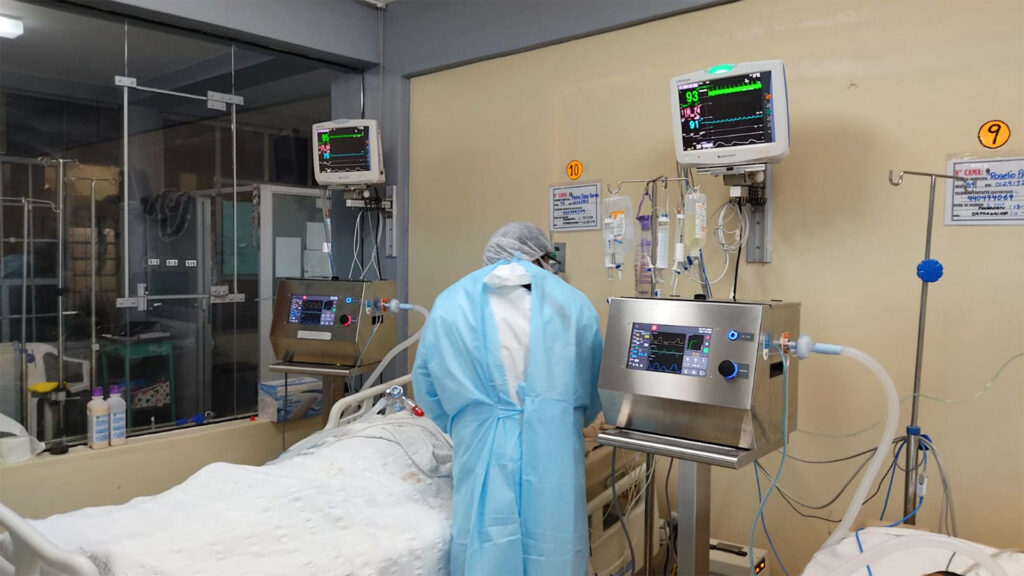
The great work of innovation of the MASI Project has already reached the international level: the scientific journal HardwareX of the Elsevier group has published an article by its creators. In this academic work, our researchers explain how they manufactured and implemented the project's low-cost ventilators, which are in operation in health centres in Lima, Chiclayo and Loreto.
The publication is entitled "Masi:A mechanical ventilator based on a manual resuscitator with telemedicine capabilities for patients with ARDS during the COVID-19 crisis ". At spanish this translates as "Masi: A mechanical ventilator based on a manual resuscitator with telemedicine capabilities for patients with ARDS during the COVID-19 crisis". The 21-page, freely downloadable text provides valuable information for the international scientific community, entrepreneurs and individuals to develop this medical technology.
"This publication will be followed by research to validate use and performance in pre-clinical and clinical contexts".
Toxicologist of the MASI Validation team.
"In this paper, we present a low-cost, portable ventilator that could be rapidly manufactured to meet the growing demand produced by the pandemic," comments the publication'sabstract. These ventilators should have the functional capacity to treat patients with COVID-19 and severe acute respiratory distress syndrome (ARDS), the paper notes.
For the creators of MASI, disseminating this technology in a scientific environment such as HardwareX is an indicator of the quality of their research. Appearing in this journal is not easy: in November 2020, they submitted the article for review and managed to obtain approval for publication after four months.
"Being published in Elsevier is important because it validates the quality of our article. In it we explain in detail how the ventilator is manufactured," says Dr Benjamín Castañeda, general coordinator of the project. The scientist adds that, in this way, they have fulfilled their commitment to open up the data so that researchers, companies and interested individuals can develop and implement it.
"The free and open dissemination of all information related to the MASI project was an agreement between the partners from the outset".
General Manager of Diacsa, a technology development company.
"With this article we aim to have a positive impact not only on the general public but also on scientists in the region.
Professor and coordinator of the area of Clinical Engineering of the Biomedical Engineering Speciality of the PUCP-UPCH.
.jpg)